
Buying guide
Best Heavy-Duty Vegetable Chopper: 7 Levels of Work
The Breville Sous Chef 16 is the strongest realistic home choice. Robot Coupe CL50 is the better fit for repeated commercial batches.
Heavy duty should describe workload, not a black plastic finish. At home, it means a stable motor, a large bowl, and replaceable accessories. In a restaurant, it means an induction motor, continuous feed, rated throughput, and parts support. The right answer changes sharply at that boundary.
We have not tested these products hands-on. The shortlist comes from current manufacturer manuals and product pages, checked against the needs behind this search. Live price, stock, included accessories, and warranty terms can change, so verify the exact listing before buying.
Quick comparison
| Product | Relevant design | Best for | Main drawback |
|---|---|---|---|
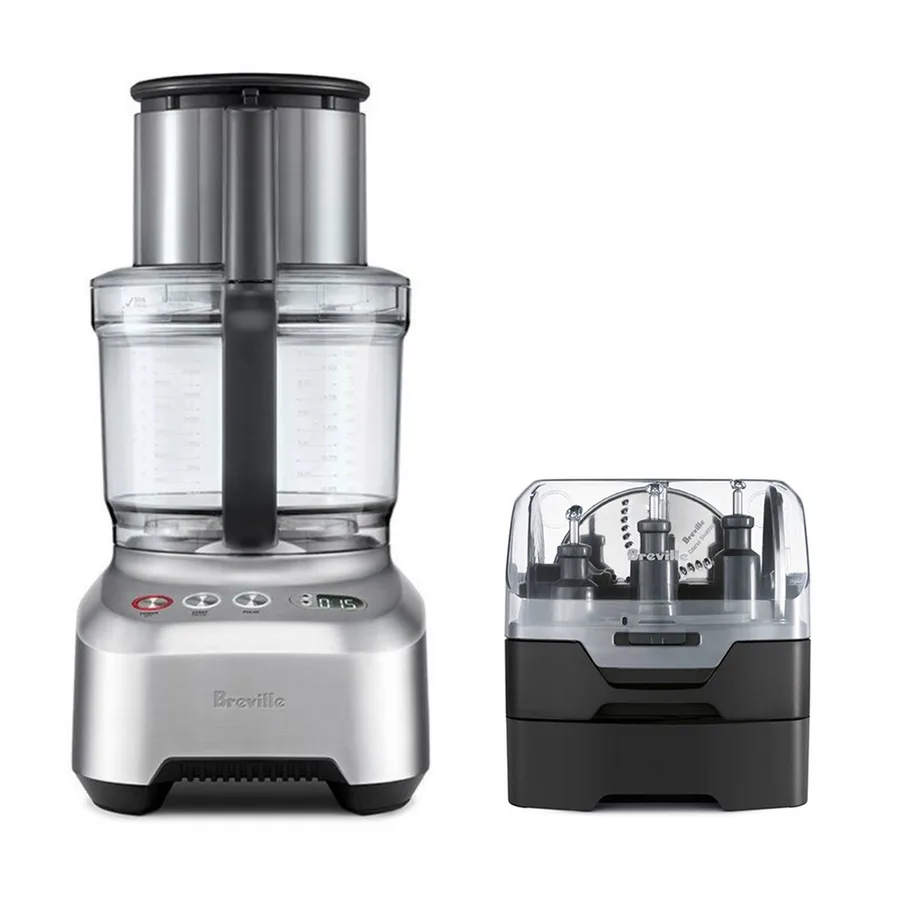
| Breville Sous Chef 16 Peel & Dice BFP820 | 16-cup bowl, included 12-millimeter dicing kit, 1200-watt motor | prosumer slicing and dicing | It is expensive, weighs more than 30 pounds, and needs substantial storage for the machine and accessory box |
| Robot Coupe CL50 | 1.5-horsepower induction motor, 425 rpm, rated output up to 220 pounds per hour | high-volume commercial prep | Discs and dicing grids determine the cut and can change the final cost |
| Cuisinart Mini-Prep Plus DLC-2A | 24-ounce bowl, reversible chop and grind blade | small batches and texture control | The bowl is only three cups, and there is no feed tube |
| Waring Commercial WFP16SCD | Four-quart bowl, continuous feed, dicing assemblies | commercial bowl processing plus dicing | Large footprint and commercial price |
| Sammic CA-31 | Continuous feed and dedicated discs | restaurant onion prep | Commercial cost and footprint |
| KitchenAid 3.5 Cup Food Chopper KFC3516 | 3.5-cup bowl, two speeds plus pulse, drizzle basin | sauces, dressings, and measured pulsing | The extra control makes the lid and switch arrangement a little busier, and the bowl is still too small for family-size slicing work |
| Hamilton Beach Stack & Press 72740 | 350-watt motor, three-cup bowl, press-to-run lid | one-touch chopping | One control keeps operation simple, but it gives less texture control than separate speeds or a dedicated pulse button |
Breville Sous Chef 16 Peel & Dice BFP820: Prosumer slicing and dicing
Choose Breville Sous Chef 16 Peel & Dice BFP820 when prosumer slicing and dicing matters most. The included dicing kit creates 12-millimeter cubes, while separate discs handle slicing, shredding, julienne cuts, and fries. A 16-cup main bowl and 2.5-cup mini bowl cover very different batch sizes. The manufacturer documents the current configuration and care guidance here.
Pros
- 16-cup bowl, included 12-millimeter dicing kit, 1200-watt motor.
- The design directly suits prosumer slicing and dicing.
- The maker publishes model-specific documentation.
Cons
- It is expensive, weighs more than 30 pounds, and needs substantial storage for the machine and accessory box.
- It will not replace a chef’s knife or a full processor for every cut.
Start here if that fit describes your kitchen. The useful part is the match between the mechanism and the work, not the biggest specification.
Robot Coupe CL50: High-volume commercial prep
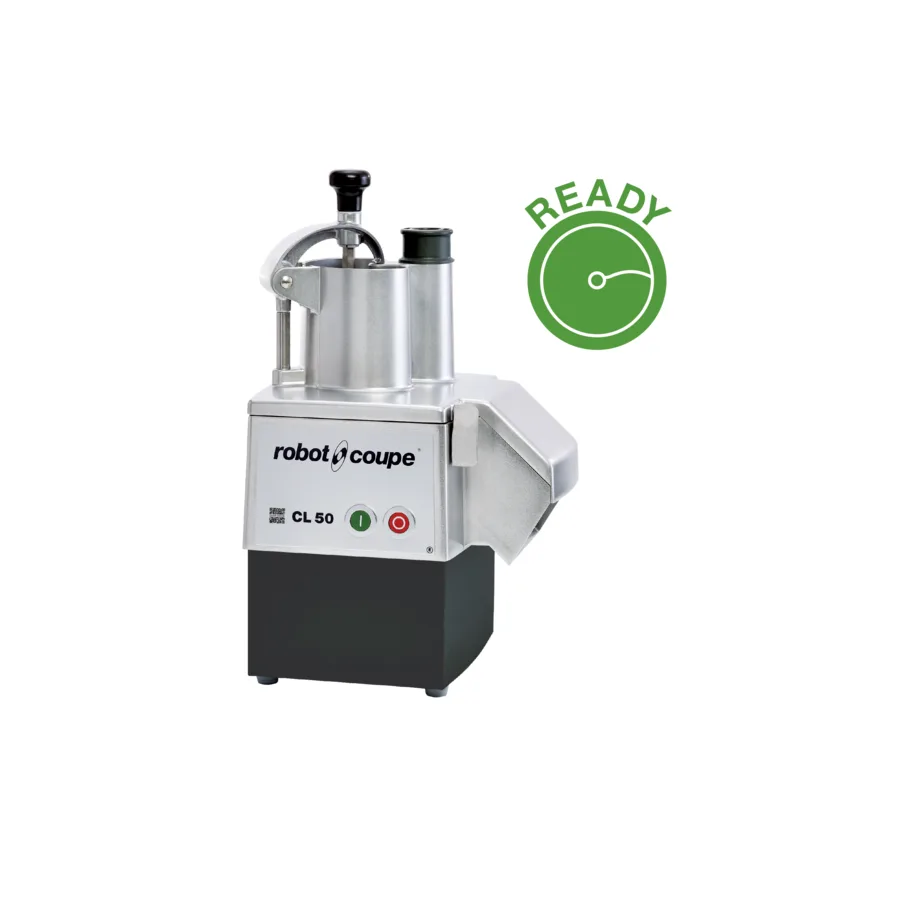
The case for Robot Coupe CL50 is high-volume commercial prep. The CL50 uses interchangeable discs for slicing, grating, and dicing. Robot Coupe lists a large half-moon hopper, two cylindrical feeds, and a metal motor unit intended for repeated service. The manufacturer documents the current configuration and care guidance here.
Pros
- 1.5-horsepower induction motor, 425 rpm, rated output up to 220 pounds per hour.
- The design directly suits high-volume commercial prep.
- The maker publishes model-specific documentation.
Cons
- Discs and dicing grids determine the cut and can change the final cost. This is a tall, heavy commercial machine that makes little sense for ordinary home batches.
- It will not replace a chef’s knife or a full processor for every cut.
Use it when that strength reflects your normal batch. If the drawback sounds familiar, the first pick is the safer fit.
Cuisinart Mini-Prep Plus DLC-2A: Small batches and texture control
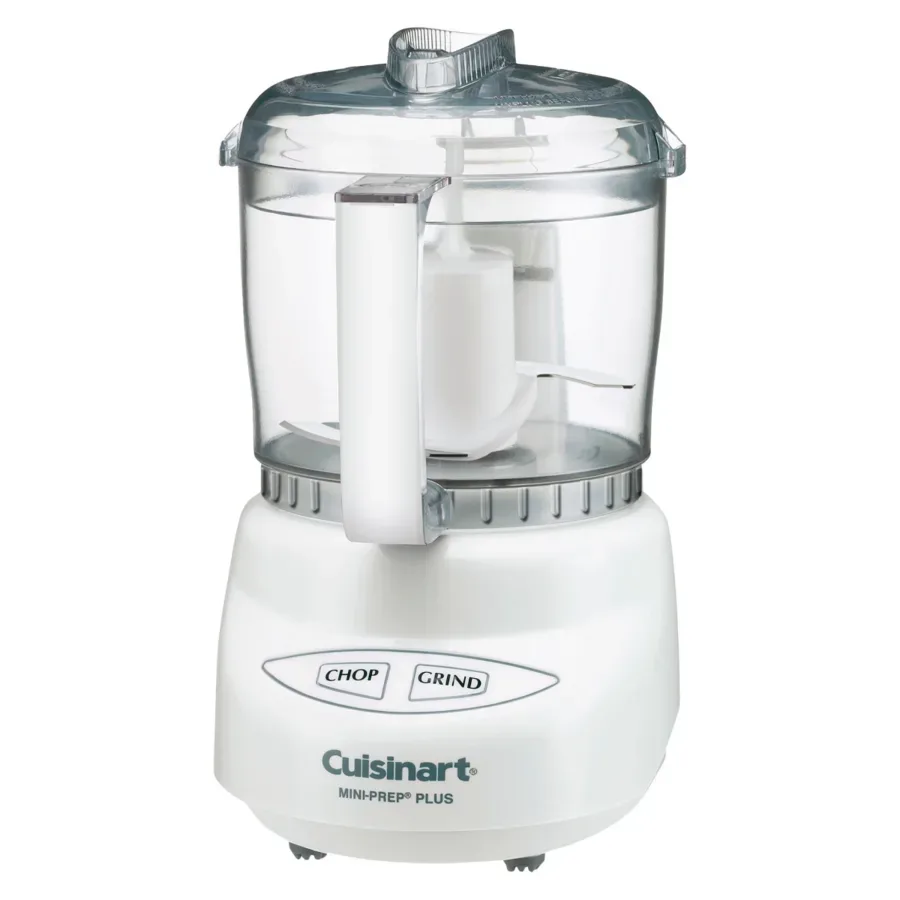
For small batches and texture control, Cuisinart Mini-Prep Plus DLC-2A makes the clearest tradeoff. Its auto-reversing blade uses a sharp edge for chopping and a blunt edge for grinding. That is unusually useful when the same machine must move between onions, herbs, hard cheese, and nuts. The manufacturer documents the current configuration and care guidance here.
Pros
- 24-ounce bowl, reversible chop and grind blade.
- The design directly suits small batches and texture control.
- The maker publishes model-specific documentation.
Cons
- The bowl is only three cups, and there is no feed tube. Large batches mean stopping and reloading.
- It will not replace a chef’s knife or a full processor for every cut.
Use it when that strength reflects your normal batch. If the drawback sounds familiar, the first pick is the safer fit.
Waring Commercial WFP16SCD: Commercial bowl processing plus dicing
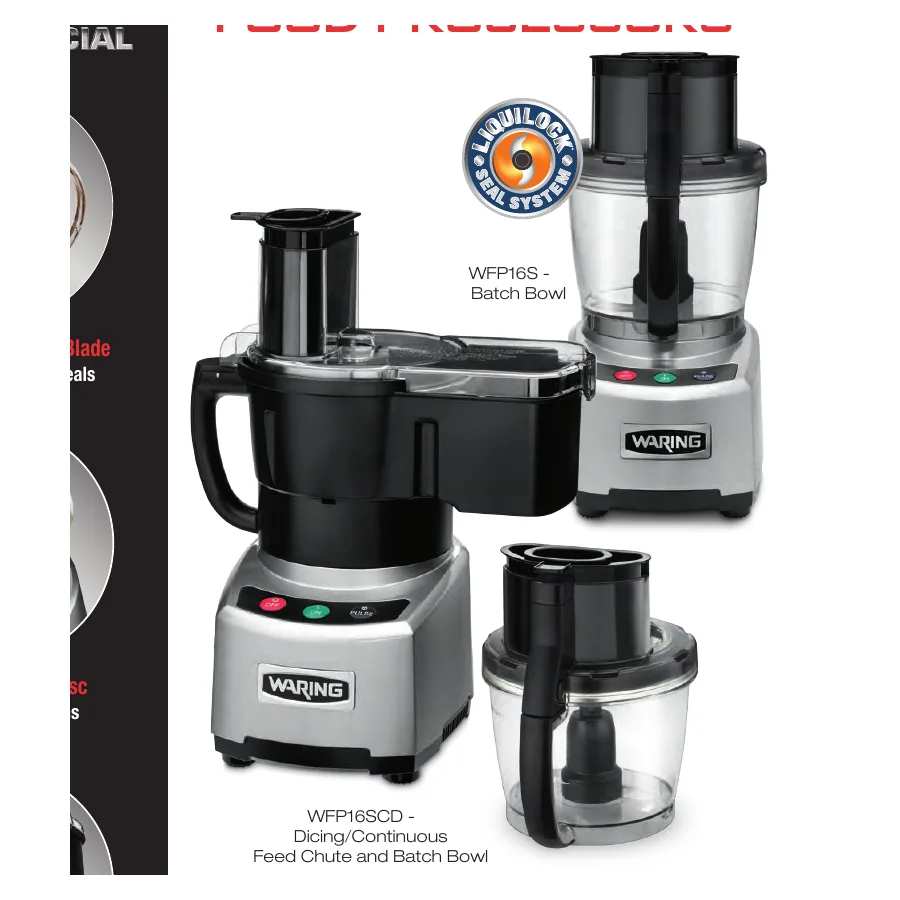
If commercial bowl processing plus dicing is the job you do most often, Waring Commercial WFP16SCD is the one to inspect first. It has a four-quart bowl, continuous feed, and dicing assemblies. The manufacturer documents the current model and configuration here.
Pros
- The design matches commercial bowl processing plus dicing.
Cons
- Large footprint and commercial price.
Sammic CA-31: Restaurant onion prep
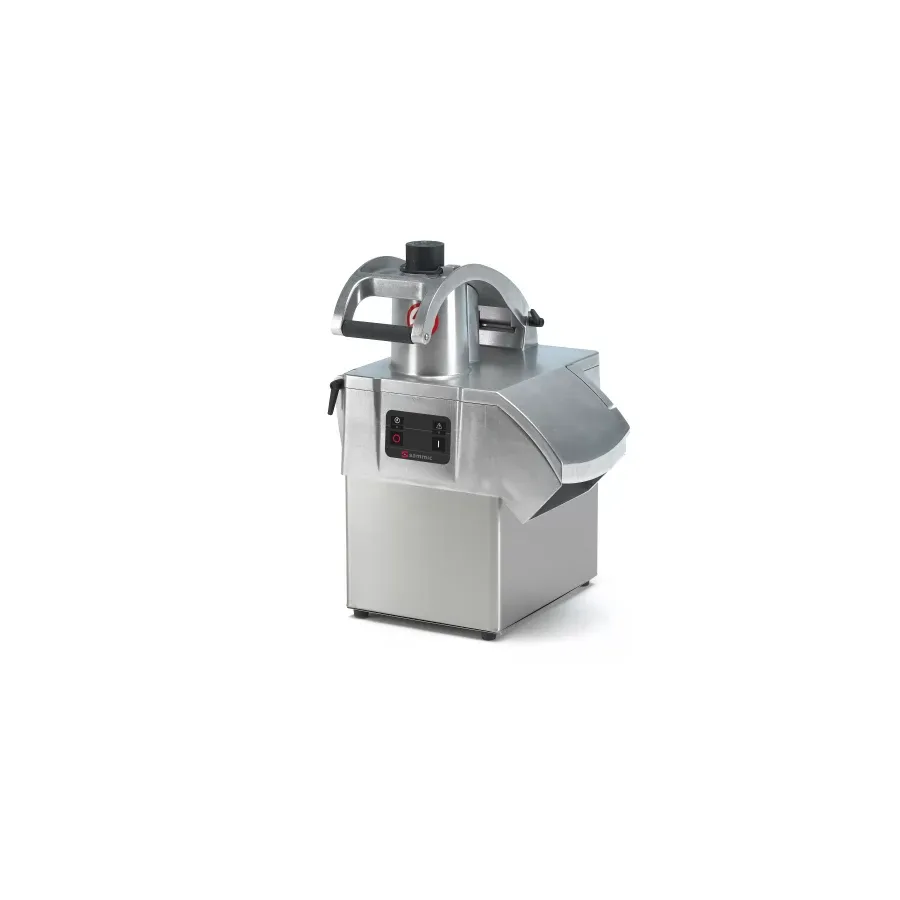
Sammic CA-31 earns its place here through restaurant onion prep. It has continuous feed and dedicated discs. The manufacturer documents the current model and configuration here.
Pros
- The design matches restaurant onion prep.
Cons
- Commercial cost and footprint.
KitchenAid 3.5 Cup Food Chopper KFC3516: Sauces, dressings, and measured pulsing
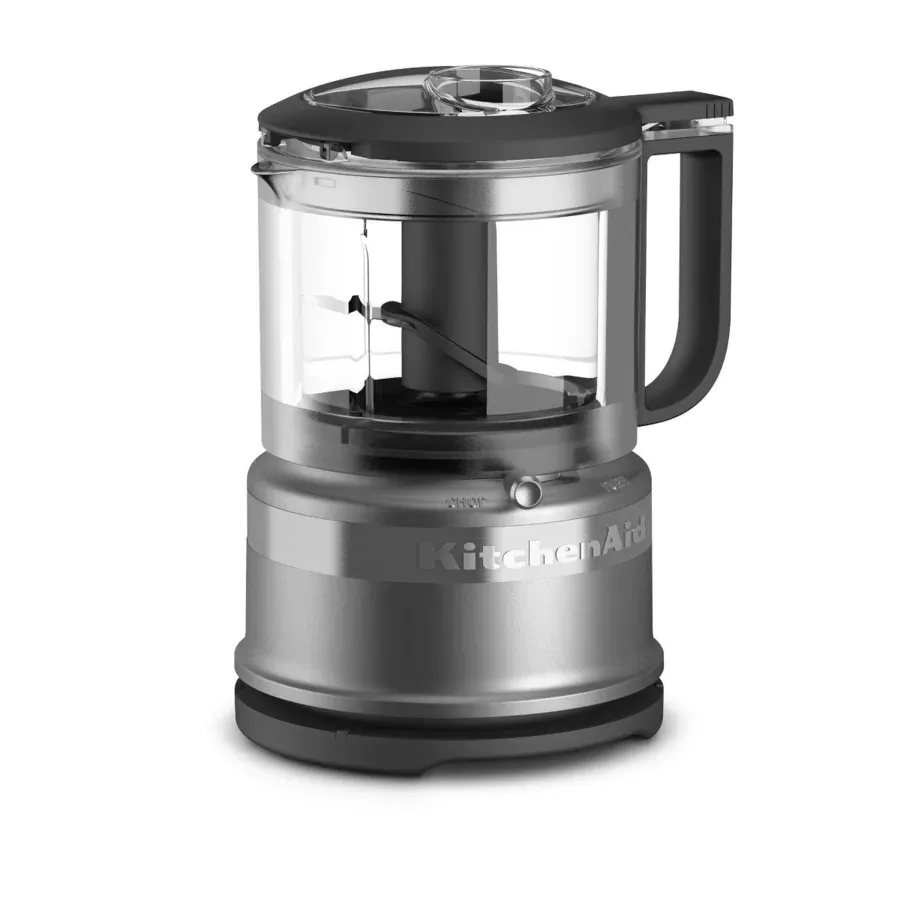
Buy KitchenAid 3.5 Cup Food Chopper KFC3516 for sauces, dressings, and measured pulsing. It has a 3.5-cup bowl, two speeds plus pulse, and a drizzle basin. The manufacturer documents the current model and configuration here.
Pros
- The design matches sauces, dressings, and measured pulsing.
Cons
- The extra control makes the lid and switch arrangement a little busier, and the bowl is still too small for family-size slicing work.
Hamilton Beach Stack & Press 72740: One-touch chopping
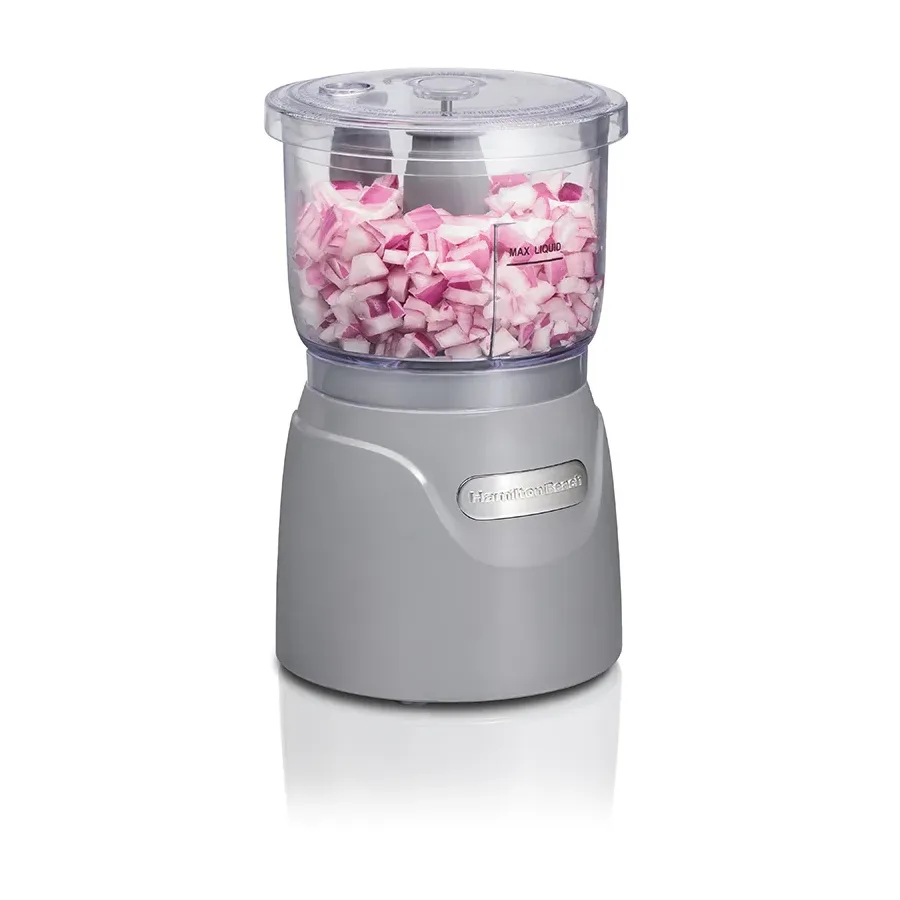
When the job is one-touch chopping, Hamilton Beach Stack & Press 72740 gives you the relevant setup. It has a 350-watt motor, three-cup bowl, and press-to-run lid. The manufacturer documents the current model and configuration here.
Pros
- The design matches one-touch chopping.
Cons
- One control keeps operation simple, but it gives less texture control than separate speeds or a dedicated pulse button.
What matters for this job
- Estimate the pounds or bowls processed in a busy hour. A home food processor handles batches; a continuous-feed commercial unit handles a workflow.
- Check duty-cycle language in the manual. Motor wattage does not tell you how long a machine can run under load.
- Budget for discs, grids, bowls, and replacement pushers. Heavy-use ownership depends on parts availability more than a long feature list.
- Do not defeat safety interlocks to save seconds. A machine built for hard vegetables can injure quickly when guards are missing.
A safer workflow is to prepare ingredients on a board, load within the marked limit, fit every guard, and use the shortest action that gives the texture you want. Disconnect electric machines before touching a blade or clearing a grid. For manual models, remove the blade by its hub and store it under its cover.
Which one should you buy?
Choose the first pick when you want the closest fit without buying a larger system. The second makes sense when its special strength matches your daily work. The third is deliberately different, not a token budget pick. It covers a buyer whose batch size, grip, or required cut changes the answer.
For broader context, compare our overall food chopper guide and manual vegetable chopper guide. The mini electric chopper guide is useful when counter space matters more than slicing attachments.
Frequently asked questions
What makes a vegetable chopper heavy duty?
A durable drive system, stable housing, serviceable parts, and a workload rating matter more than peak wattage.
Can a home processor handle restaurant prep?
It may cover occasional catering or small batches, but repeated daily throughput can exceed its intended duty and slow the line with reloads.
Does more horsepower improve the cut?
Not by itself. The correct sharp disc, steady feed pressure, and suitable ingredient temperature determine cut quality.
Before you buy
Heavy duty should mean the whole workflow can take the load. That includes the bowl or feed head, cutting parts, motor, work surface, and cleanup time. A large home processor can handle substantial batches, but it is still a poor choice if the required grid is missing or the machine must be lifted from a high shelf every day. A commercial unit makes more sense when repeated service and compatible discs justify its footprint.
Do not use capacity as a reason to force oversized or unprepared produce through a machine. Follow the maker’s feed and safety instructions, keep hands away from the cutting path, and unplug before clearing a jam. For occasional home prep, the compact Cuisinart may be the more sensible purchase even though it is the least industrial option here. The right pick is the one that reduces repeated work without creating a second job after cooking.
How we chose
We compared the cutting mechanism, useful batch size, controls, cleaning instructions, safety design, and whether each product actually answers the modifier. Specifications came from the manufacturer pages linked in each product section. Independent testing from Food & Wine’s vegetable chopper comparison and Tom’s Guide’s manual chopper comparison helped frame practical differences. We did not copy their rankings or claim their tests as ours.
Recommendation
The Breville Sous Chef 16 is the strongest realistic home choice. Robot Coupe CL50 is the better fit for repeated commercial batches. Check the current package contents before checkout, especially when a dicing grid or accessory disc is the reason to buy.