
Buying guide
Best Food Storage Containers for the Freezer: 5 Durable Picks
Snapware Total Solution is the best set for a freezer full of batch-cooked portions. Rubbermaid is lighter, while OXO suits freezer-to-oven cooking.
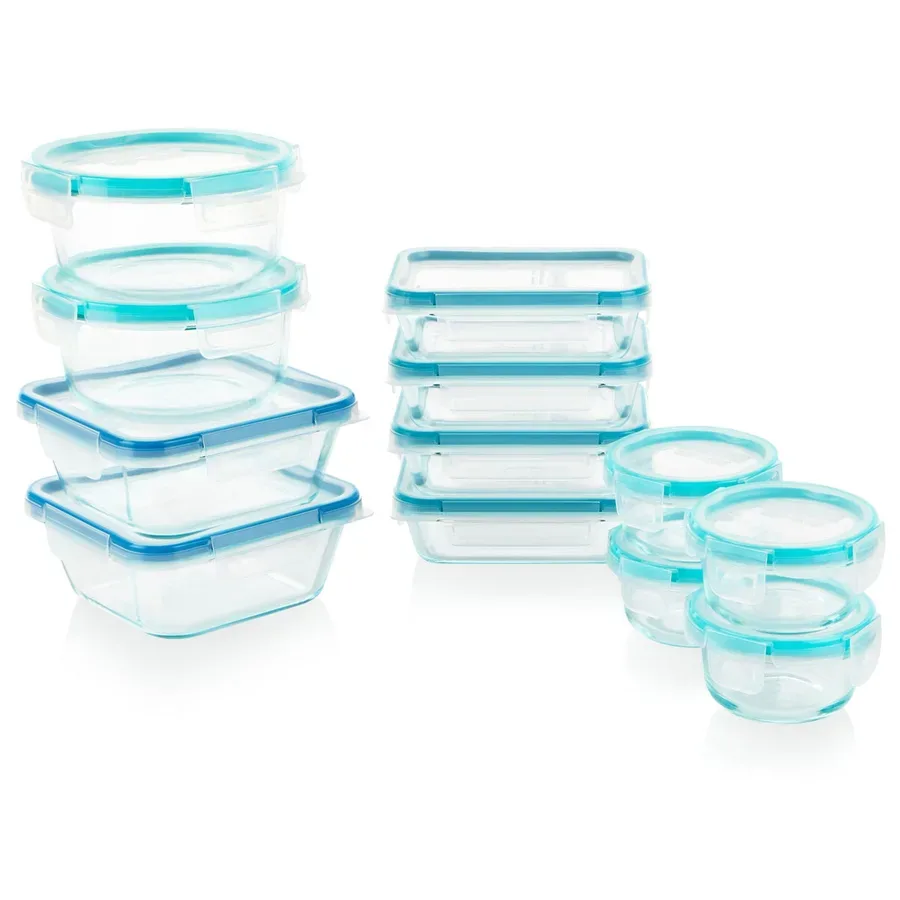
Freezer containers need straight walls, dependable lids, and enough sizes to divide a recipe before it turns into one solid block. Snapware Total Solution is the most useful batch-cooking set here. Rubbermaid is better when low weight and compact stacking matter.
Quick comparison
| Product | Best for | Freezer material and seal | Main drawback |
|---|---|---|---|
| Snapware Total Solution Pyrex Glass 24-Piece Set | Batch cooking | Pyrex glass; twelve four-tab lids | Many heavy pieces |
| Rubbermaid Brilliance 20-Piece Set | Light stacked portions | Tritan plastic; leak-proof latched lids | Can stain or scratch |
| OXO Good Grips Smart Seal Glass 12-Piece Set | Freezer-to-oven meals | Borosilicate glass; 4 oz to 3.5-cup sizes | Smaller set |
| Pyrex FreshLock 6-Piece Glass Set | Large repeated portions | Airtight, leak-proof four-tab lids; lids freezer and microwave safe | No small containers |
| Caraway Food Storage Set | Coordinated freezer set | Ceramic-coated glass and two included organizers | Expensive; coating needs care |
Best for batch cooking: Snapware Total Solution
The Snapware Total Solution Pyrex Glass 24-Piece Set includes twelve vessels and twelve four-tab lids. That is enough to split chili, stew, grains, and cooked beans into meal-size blocks instead of freezing a whole pot.
Snapware lists the vessels for freezer, microwave, and dishwasher use. The set stacks, but it is heavy and consumes cabinet space when empty. Owner feedback on the manufacturer page includes latch failures, so do not force a tab that is misaligned.
Best lightweight option: Rubbermaid Brilliance
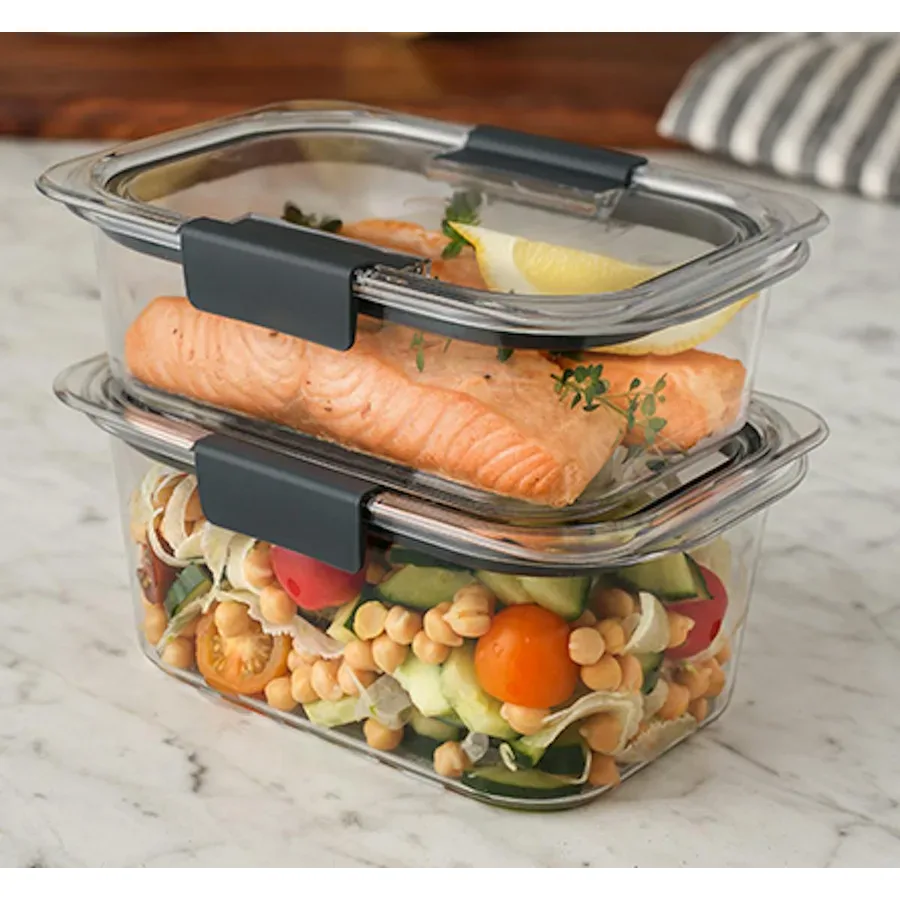
The Rubbermaid Brilliance 20-Piece Set avoids the weight of glass and makes a tall freezer stack easier to move. Clear bases help identify food, although frost eventually obscures everything. Label the lid with food and date anyway.
Plastic is less forgiving of oily sauces and aggressive reheating. The set’s pros are low weight, modular rectangles, and a stated leakproof closure. Its cons are wear and the need to follow precise microwave venting directions.
Best for freezer-to-oven plans: OXO Smart Seal
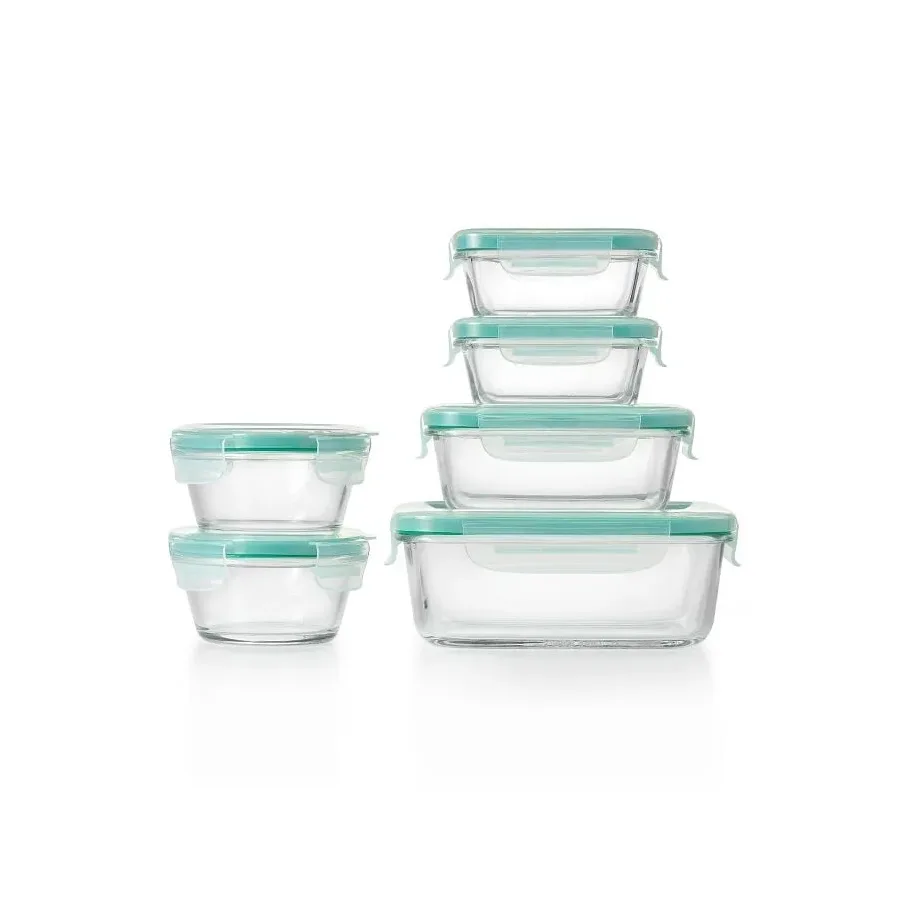
The OXO Good Grips Smart Seal Glass 12-Piece Set uses borosilicate bases that OXO approves for freezer-to-preheated-oven use. The qualification matters. The oven must be preheated, the lid stays out, and all manufacturer warnings still apply.
Six containers are enough for a modest meal-prep routine. This set is easier to manage than Snapware’s twelve vessels, but offers less total capacity.
How to prevent freezer messes
Leave headspace for liquids to expand. A container filled to the rim can lift its lid or crack. Cool food safely before freezing, wipe the sealing surface, and label it with both contents and date. Freeze shallow portions for faster cooling and easier thawing.
Glass requires care around temperature changes. Never move hot glass onto a wet counter or frozen glass directly into an oven unless the maker explicitly permits that sequence. Inspect for chips and cracks. The USDA’s freezing guidance explains that freezing pauses bacterial growth but does not make mishandled food safe.
Frequently asked questions
Is glass or plastic better for the freezer?
Glass resists odor and staining. Plastic is lighter and easier to pack tightly. Both work when the manufacturer rates the exact product for freezer use.
How much headspace does soup need?
Leave visible room for expansion rather than filling to the lid. The needed amount changes with container shape and food. Follow any fill line supplied by the maker.
Can I thaw a sealed container in the microwave?
Only under the maker’s microwave and venting directions. Release or vent the lid as instructed so pressure cannot build.
Why does freezer food still get icy?
Air in the container and repeated temperature swings encourage ice crystals. Choose a container close to the portion size, seal it correctly, and avoid leaving the freezer door open.
For more glass choices, see our glass container guide. For short-term storage, use the fridge container guide.
Make freezing predictable
The most important detail is not the material name. Check the instructions for freezer use, temperature changes, and the lid. Glass can be damaged by thermal shock, so do not move a very cold vessel directly into a hot oven or otherwise assume every glass container has the same limits. Plastic avoids some breakage worries but still needs room for expansion and can become less pleasant after repeated heating or rough cleaning.
Leave headspace in soups, sauces, and other foods that expand as they freeze. A nearly full container can push against its lid or split when the contents swell. Freeze flat when the shape allows it, then stack once solid. Label the food and date on the lid or an approved label, since an opaque frost layer turns even a clear container into a guessing game.
For thawing, use the method the food and container instructions allow. A sealed lid can trap pressure during microwave heating, and a cold glass base may need a gradual temperature change. Do not use a freezer container as permission to reheat indefinitely. Use short intervals, stir when appropriate, and check the center before serving.
Do not judge a freezer container only by whether its lid closes in the kitchen. It must remain usable when frozen, easy to identify through frost, and manageable when full. Portion size and headspace are part of the purchase decision.
Before you order
Count the portions you freeze in a normal week and choose sizes that leave headspace. Measure the drawer or shelf, including room to lift a lid. If you often reheat from frozen, prioritize a container whose body and lid instructions support that route. If you mostly store long-term portions, light weight and clear labels may matter more than oven use. The best freezer set is manageable when full.
For repeatable family portions: Pyrex FreshLock
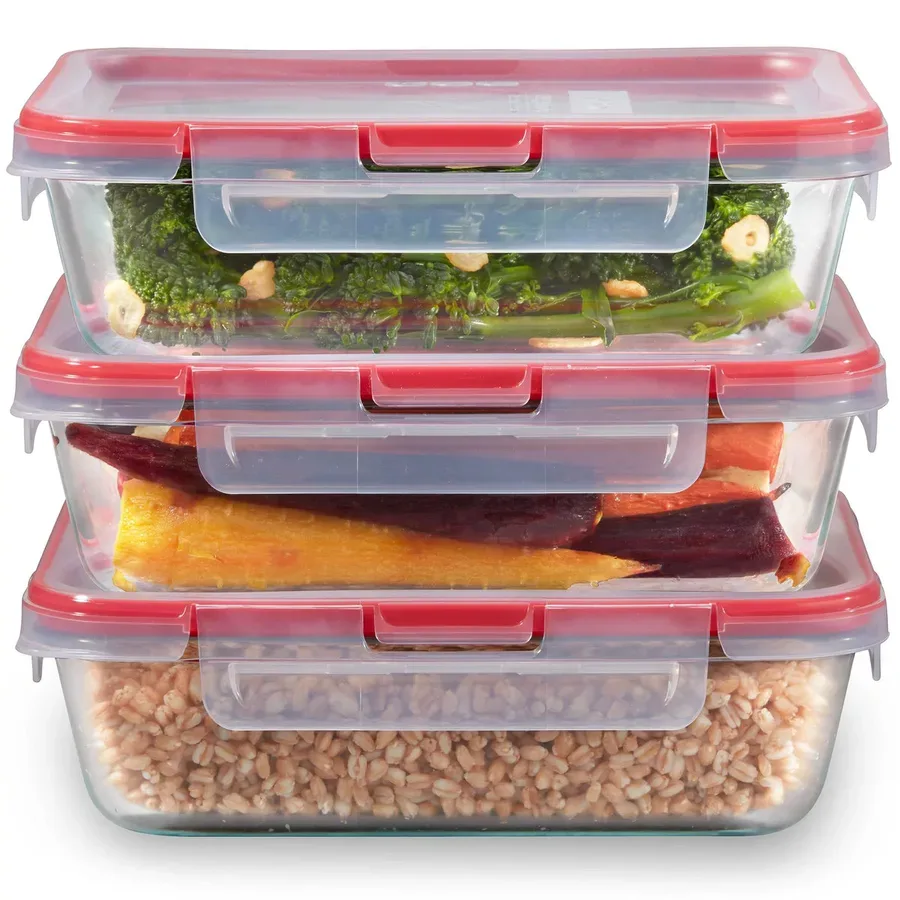
Pyrex FreshLock 6-Piece Glass Set keeps the choice simple with three matching glass vessels and airtight, leak-proof four-tab locking lids. The BPA-free lids are freezer and microwave safe, and the glass bodies are dishwasher, freezer, and microwave safe. It works well for large, repeatable portions, but the set leaves no small container for sauces or single servings.
For an organized ceramic-coated set: Caraway
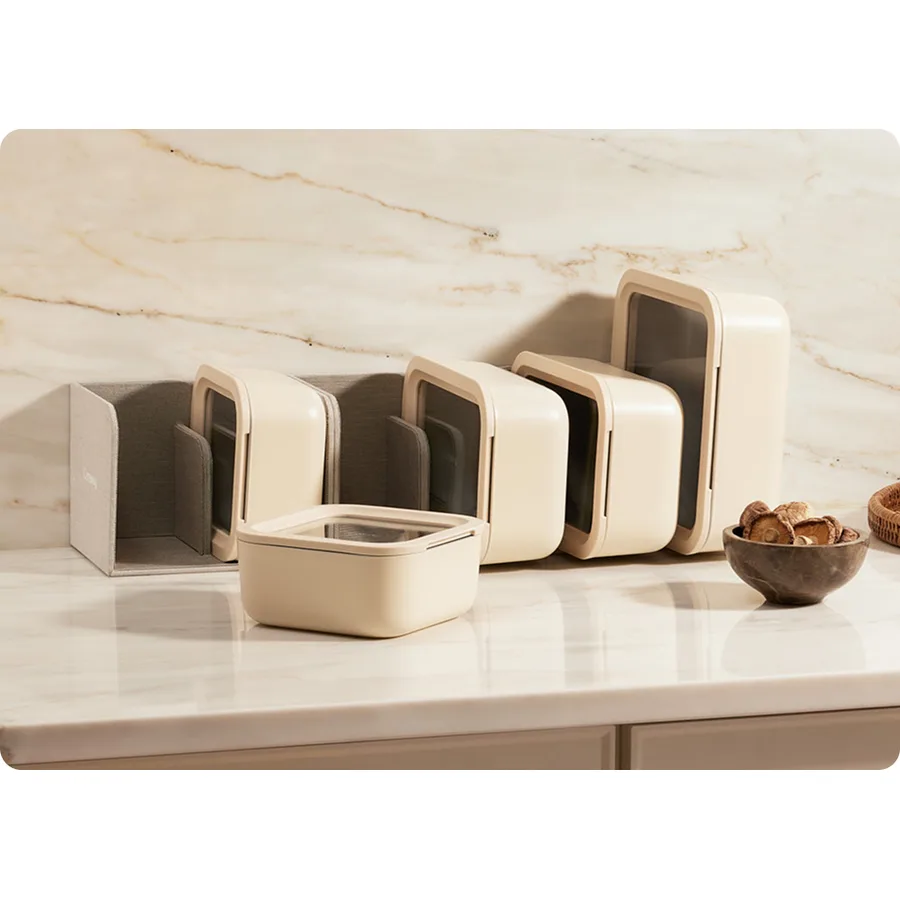
Caraway Food Storage Set uses ceramic-coated glass bodies and ships with two organizers in one coordinated purchase. Caraway says the coating is made without BPA, PTFE, and PFAS and rates the pieces for freezer, microwave, and oven use. The organizers help keep the set together, but the collection costs more than plain glass and the coating needs careful washing.
How we chose
We checked manufacturer freezer ratings, thermal instructions, set sizes, stacking, and lid designs. We did not freeze, drop, or leak-test the containers. Product claims came from Snapware’s 24-piece glass set, Rubbermaid’s Brilliance range, OXO’s Smart Seal glass 12-piece set, Pyrex’s FreshLock 6-piece set, and Caraway’s food storage set. America’s Test Kitchen provided independent testing context. We did not test these containers hands on.
Recommendation
Snapware is the batch-cooker’s set. Rubbermaid is easier in a tightly packed drawer freezer. OXO makes sense when a controlled freezer-to-oven route is part of the plan. Add Pyrex FreshLock for large matching portions and Caraway only if a coordinated, ceramic-coated set earns its price.